
Two weeks from today, on October 28, the country will mark National First Responders Day. There will be thank-you posts, free coffee at the drive-through, maybe a plate of cookies dropped off at the station. All of it is good, and all of it is deserved.
But first responder families know there’s another side to that day. Back in May, at the National Fallen Firefighters Memorial in Emmitsburg, Maryland, 204 names were added to the memorial, 97 of them firefighters who died in the line of duty in 2025 alone. Every one of those names belonged to somebody’s husband, wife, son, daughter, or dad.
The same families who will be celebrated on October 28 are the ones who know the sound of bagpipes, the sight of a flag folded into a tight triangle, and the silence after the last radio call goes unanswered.
The Sixth Pair
Last time we looked at weeping and laughing, the private tears and the laughter at the supper table. Solomon’s next line looks similar, but it moves out of the house and into the street:
“A time to mourn, and a time to dance.”
ECCLESIASTES 3:4, NKJV
The Hebrew word for “mourn” is saphad (Strong’s H5594). It isn’t quiet crying. It’s the public lament of a funeral, the wailing of a whole community, sometimes with people beating their chests in grief. It’s a word for grief that’s shared out loud.
The word for “dance” is raqad (Strong’s H7540). It means to skip or leap. It’s the word the Psalmist uses when he pictures the whole earth celebrating God’s deliverance: “The mountains skipped like rams, the little hills like lambs” (Psalm 114:4, NKJV). It’s joy that can’t sit still.
Weeping and laughing happen inside a person. Mourning and dancing happen among people. They’re things a community does together. And first responder families know both better than most.
A Time to Mourn
When word came that King Saul and his son Jonathan had fallen in battle, David didn’t tell his men to shake it off and get back to work. Scripture says:
“And they mourned and wept and fasted until evening for Saul and for Jonathan his son, for the people of the LORD and for the house of Israel, because they had fallen by the sword.”
2 SAMUEL 1:12, NKJV
That word “mourned” is saphad, the same word Solomon uses in Ecclesiastes 3:4. David stopped everything, and a whole company of fighting men grieved together. Then David wrote a lament and had it taught to the people, so they would never forget: “How the mighty have fallen!” (2 Samuel 1:19, NKJV). And for his closest friend he wrote one of the most personal lines in the Old Testament: “I am distressed for you, my brother Jonathan” (2 Samuel 1:26, NKJV).
Any officer who has lost a partner, any firefighter who has lost a member of the crew, knows exactly what David meant.
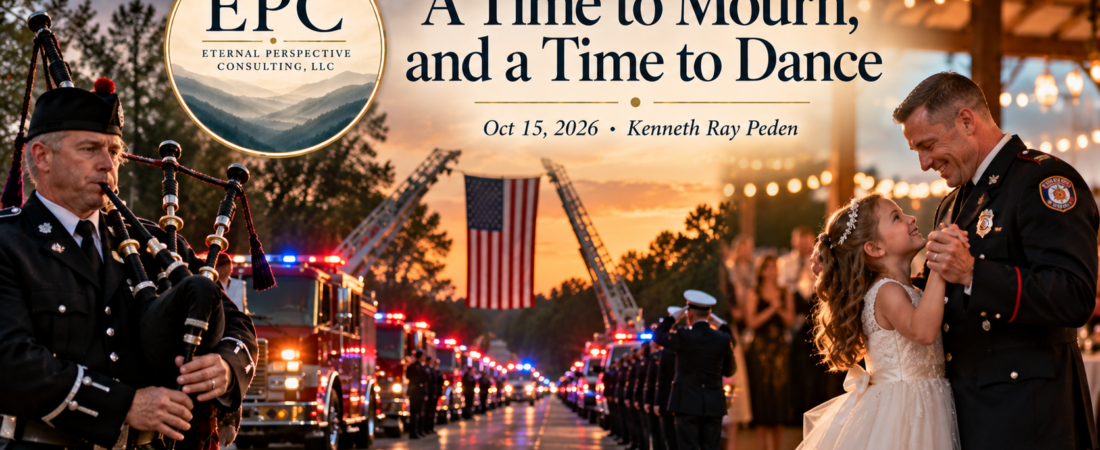
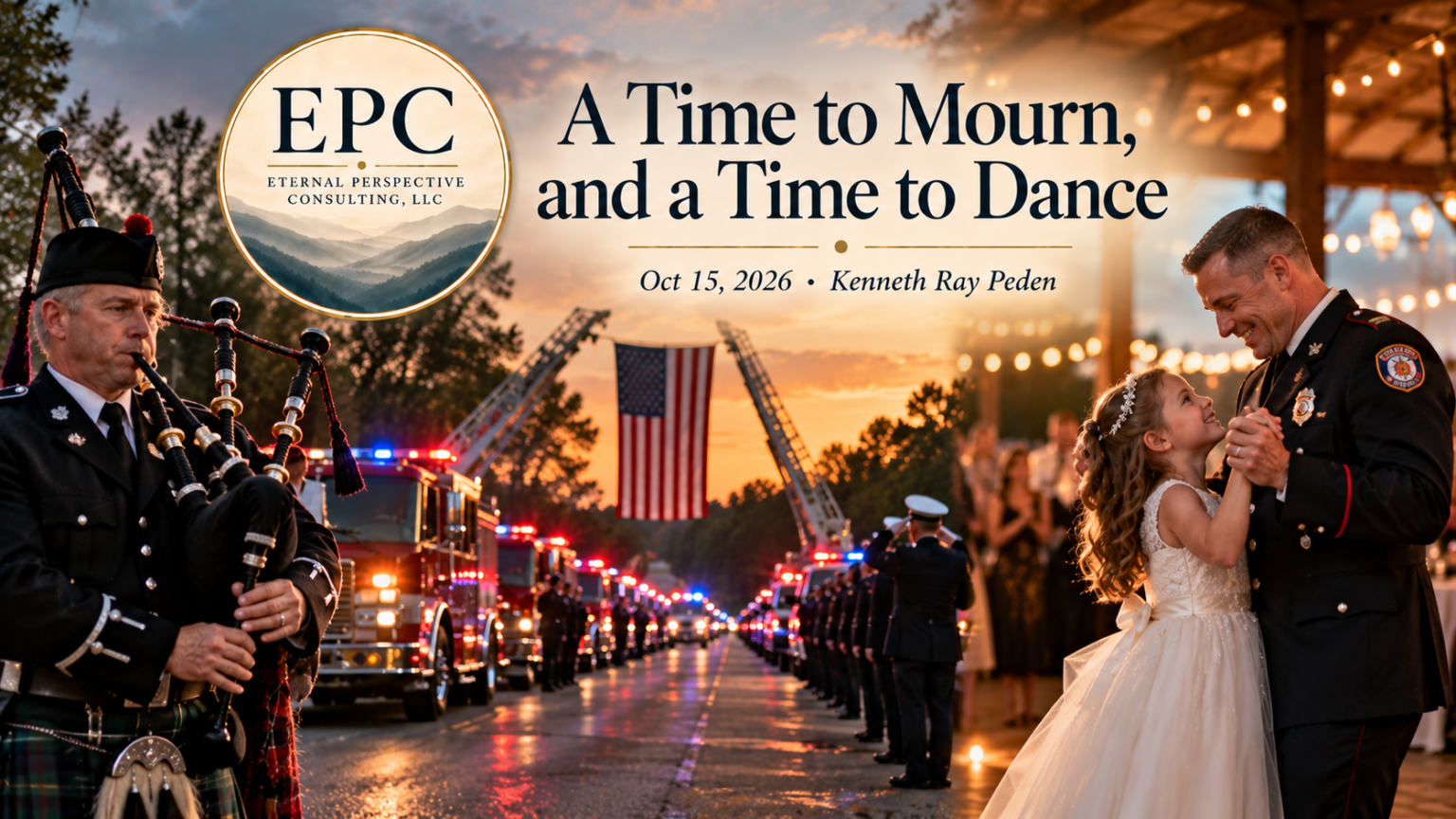
The first responder world has its own ways of mourning, and they’re powerful. The procession of engines and patrol cars stretching for miles. The bagpipes. The black band across the badge. The final call over the radio, read for the one who won’t answer. Those rituals exist because a community needs a way to say together what no one could say alone.
But here’s where it gets hard. After the funeral, the shift schedule doesn’t change. The calls keep coming. A lot of first responders are trained, formally or not, to set the grief aside and keep working. That’s necessary on the scene. It’s dangerous when it becomes a way of life. Grief that never gets a time eventually takes one, usually at the worst possible moment, and usually at home.
Jesus once described a generation that couldn’t respond to anything, joy or sorrow, using a children’s game:
“We played the flute for you, and you did not dance; we mourned to you, and you did not lament.”
MATTHEW 11:17, NKJV
When a person can no longer mourn, they usually can’t dance either. The heart doesn’t shut off just one direction.
Jesus offered a better way:
“Blessed are those who mourn, for they shall be comforted.”
MATTHEW 5:4, NKJV
The Greek word there is pentheo (Strong’s G3996), the outward, visible mourning for the dead. Jesus didn’t say blessed are those who hold it together. He said blessed are those who grieve, because grief is the doorway comfort comes through.
A Time to Dance
Now for the other half, because first responder families know how to celebrate too.
The homecoming after a long deployment, when a little boy breaks loose from his mother’s hand and runs across the parking lot. The pinning ceremony when Dad gets his promotion and the kids get to stand up front. The retirement party after thirty years, when the station throws open the bay doors and the whole crew shows up. The wedding where half the guests are in dress blues. The day a patient who wasn’t supposed to make it walks back into the station to say thank you.
Those days deserve a celebration, and Scripture says so.
When God brought Israel safely through the Red Sea, Miriam picked up a tambourine, “and all the women went out after her with timbrels and with dances” (Exodus 15:20, NKJV). Deliverance called for dancing.
And in one of the best-loved stories Jesus ever told, a father’s son came home after everyone thought he was gone for good. The father threw a party. When the older brother came in from the field, “he heard music and dancing” (Luke 15:25, NKJV). The word for “dancing” is choros (Strong’s G5525), where we get our word chorus, a whole group moving together. It’s the only time that word appears in the New Testament, and Jesus used it for a homecoming.
Here’s something worth saying plainly. Some first responders feel guilty dancing. The wedding is two weeks after the funeral. The promotion comes because someone else is gone. The celebration feels like a betrayal of the one who isn’t there. But Solomon didn’t say there’s a time to mourn instead of a time to dance. He said there’s a time for both. Celebrating the people who are still here doesn’t dishonor the one who is gone. It’s part of how a family, and a department, keeps living.
The Psalmist knew what it felt like when God turned the page:
“You have turned for me my mourning into dancing; You have put off my sackcloth and clothed me with gladness.”
PSALM 30:11, NKJV
Notice who did the turning. It wasn’t something the Psalmist forced. God turned it. And He promised to do it for His people again and again:
“Then shall the virgin rejoice in the dance, and the young men and the old, together; for I will turn their mourning to joy, will comfort them, and make them rejoice rather than sorrow.”
JEREMIAH 31:13, NKJV
Young and old, together. That’s what a good department looks like on its best day.
Beauty for Ashes
Centuries before Jesus was born, God gave Isaiah a promise about the Messiah. Part of His mission would be:
“To console those who mourn in Zion, to give them beauty for ashes, the oil of joy for mourning, the garment of praise for the spirit of heaviness.”
ISAIAH 61:3, NKJV
One Sabbath in Nazareth, Jesus stood up in the synagogue, read the opening of that passage aloud, rolled up the scroll, and said, “Today this Scripture is fulfilled in your hearing” (Luke 4:21, NKJV). The One who turns mourning into dancing isn’t a distant hope. He has already come, and He’s still in the business of trading ashes for beauty.
That’s the eternal perspective for first responder families. The mourning is real, and you shouldn’t skip it. But it isn’t the last word. Solomon said God “has put eternity in their hearts” (Ecclesiastes 3:11, NKJV), and every family that has stood at a graveside in dress uniform knows that longing. Someday the bagpipes will be silent for good, and the only music left will be the kind you dance to.
For the Family That’s Been to Too Many Funerals
If your family has stood in that line of engines and patrol cars more times than you can count, or if you’re married to someone who came home from the last funeral and went straight back to work without saying a word, you’re not alone. The mourning still needs its time. So does the dancing.
On October 28, when people thank your first responder, let them. And if you’re carrying more than a plate of cookies can fix, it may help to sit down with someone outside the department, someone who will listen first and help you see your season from God’s point of view. If that would help, I’d be glad to talk.
Kenneth Ray Peden
Senior Consultant
Eternal Perspective Consulting
eternalperspectiveconsulting.com
(903) 699-0973
Kenneth@eternalperspectiveconsulting.com